Concrete is a slow sponge
Concrete looks solid, but it is porous. After a basement floods, the slab absorbs water and releases it gradually, often over weeks. In a Wheat Ridge home with no vapor barrier under the slab, which is common in older construction, the ground itself adds moisture from below. That is why a slab can feel damp after a rainy week even when no flood occurs.
Right after extraction, air movement across the surface and a dehumidifier pull moisture out. How fast depends on the slab thickness, the temperature, the humidity and what covers it. A bare slab dries far faster than one sealed under glued-down flooring.
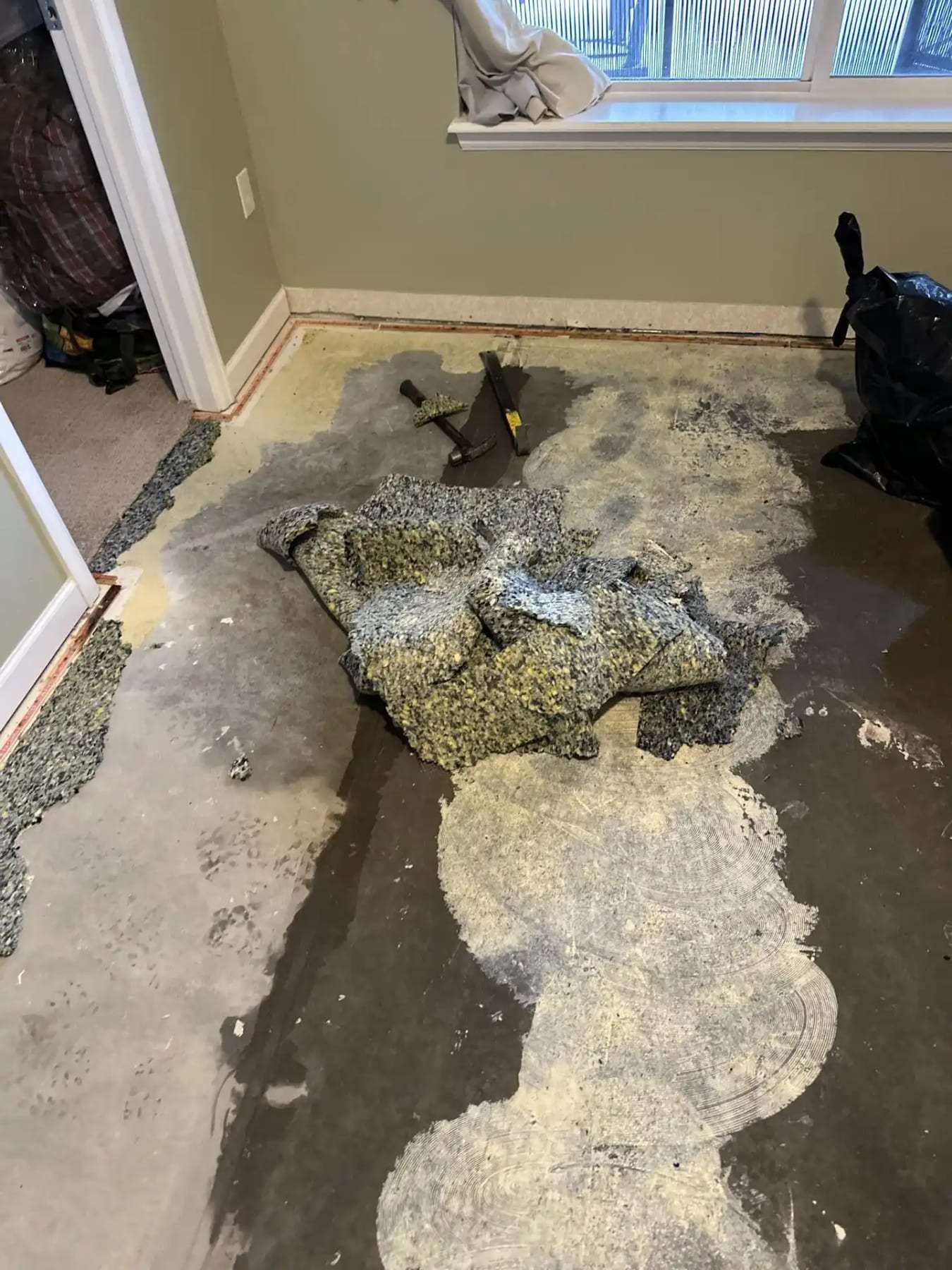
Wet carpet pad pulled up and piled on a concrete floor. Included to show the kind of work involved, not a property or job connected to this site.
A simple surface check
These are screening tests; professional meters and standard tests give firmer answers.
- Tape a plastic sheet.Tape a square of clear plastic to the slab on all four edges and leave it for a day or two.
- Look for condensation.Moisture beneath the sheet or darkening of the slab shows it is still releasing water.
- Use a meter.A concrete moisture meter or a hygrometer test gives a reading that can be compared with flooring manufacturer limits.
- Repeat after more drying.Test a couple of times a week and note the trend, not just one reading.
Flooring and slab readiness
- Covering
- Glued-down carpet or tile
- Sensitivity to slab moisture
- High
- Practical note
- Wait for a passing reading before installing
- Covering
- Floating floor over underlay
- Sensitivity to slab moisture
- Medium
- Practical note
- Use a moisture-rated underlay and check the slab first
- Covering
- Paint or sealer on slab
- Sensitivity to slab moisture
- High
- Practical note
- Coatings peel if moisture still pushes through
- Covering
- Bare slab with area rugs
- Sensitivity to slab moisture
- Low
- Practical note
- Allow air circulation beneath rugs
Longer-term moisture in the ground
If the slab never seems to dry, the question shifts to drainage. Downspouts that dump next to the foundation, soil that slopes toward the wall and a window well that collects water all supply moisture from outside. Fixing those items is often cheaper than repeated drying.
A dehumidifier left in the basement through the first wet season helps even after repairs, as long as it has a drain line or someone empties the bucket. Keep an eye on the relative humidity, and aim to keep it below the point where musty smells begin.
Common questions
How long until it is safe to install new flooring?
It depends on the product and the slab. Follow the flooring manufacturer's moisture limits and use a test rather than a calendar.
Does sealer stop slab moisture?
Some sealers help against vapor, but they cannot overcome persistent water pressure from below. Fix the water source first.
General information for Wheat Ridge, not a quote or professional advice. In an emergency, call 911.