Carpet and pad are different decisions
People usually talk about wet carpet as if it were one material, but the carpet and the pad beneath it behave very differently. The carpet has synthetic fibers and a backing that can tolerate a good deal of water and often be lifted, extracted and dried. The pad is a foam or rebond material that acts like a sponge, holds water long after the surface looks dry and is cheap enough to replace that restorers often remove it rather than risk leaving it behind.
Basement carpet in Wheat Ridge is commonly installed over a concrete slab with tack strips around the walls. That arrangement makes it easier to pull back a corner, inspect the underside and extract water directly from the pad before deciding.
Work through it in order
- IfThe water was clean and the carpet has been wet for less than a day or twoThenExtract through the carpet with a weighted wand, lift the carpet off tack strips, remove the pad and dry the slab, then reinstall over new pad.
- IfWater was gray, such as a washing machine overflowThenRemove the pad; carpet may be cleaned and dried if a provider judges the fibers and backing to be sound.
- IfWater was black, such as sewage or flood runoffThenPlan to discard both carpet and pad and clean the slab.
- IfThe carpet has been wet longer than a few daysThenExpect mold odor and backing damage; replacement is the more likely outcome.
- IfCarpet is glued down directly to the slabThenRemoval may be needed to dry the concrete, because the adhesive layer traps moisture.
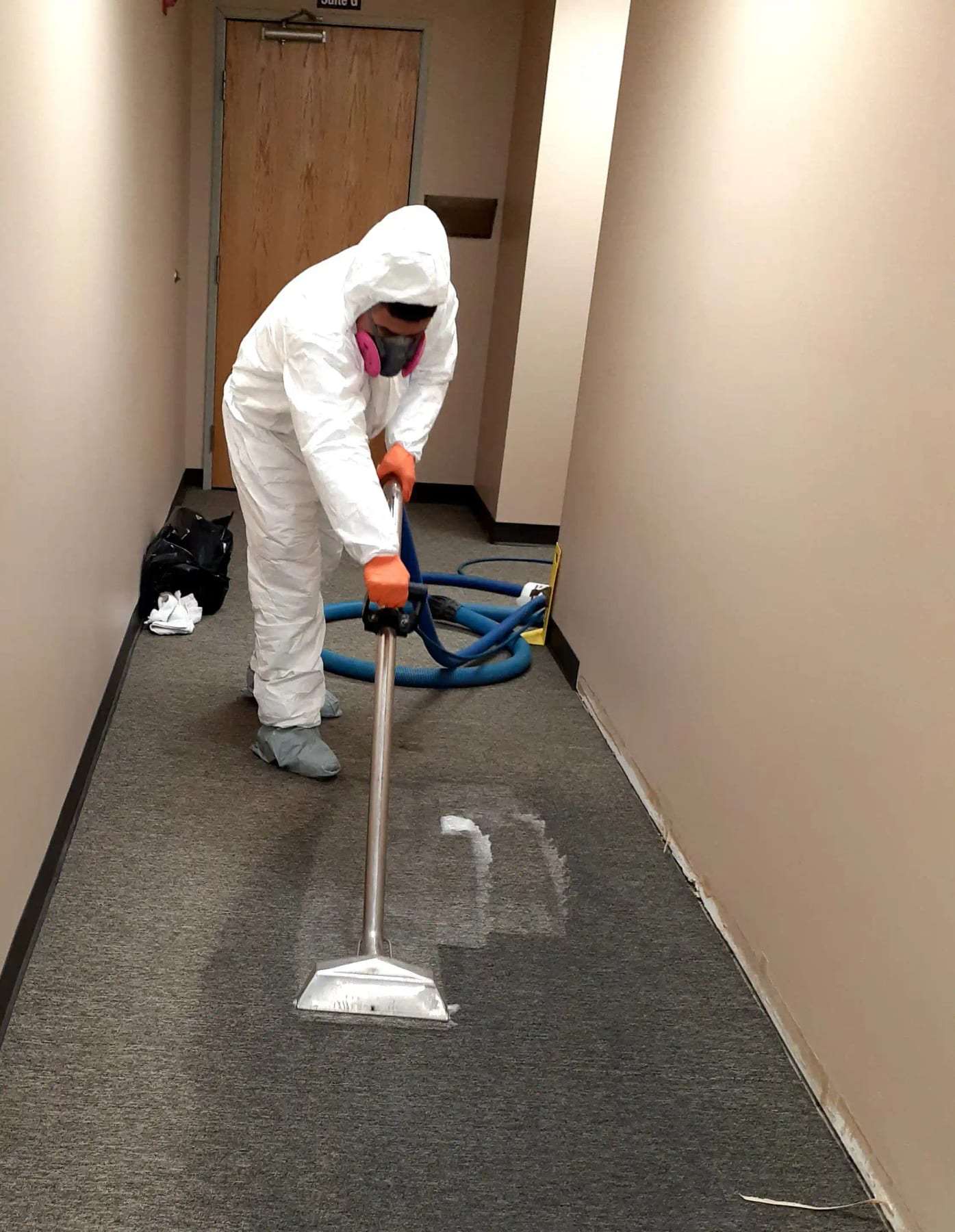
Technician in a protective suit extracting water from carpet in a narrow corridor. Shown to illustrate the work described; not a job for this site or at any address named here.
Lifting carpet to inspect it
- Check power and safety.Make sure nothing in the room is energized before kneeling on or handling wet carpet.
- Start at a corner.Use pliers to pull the carpet off a tack strip, which has sharp points. Wear gloves and sturdy shoes.
- Look and smell under the edge.Dark staining, a sour smell or a slimy pad is a sign the water has sat. Take photographs for the insurer.
- Cut the pad into strips.Rolled strips are easier to carry up stairs than one saturated sheet, which can weigh a surprising amount.
Common questions
Does drying carpet in place work?
Sometimes, if the water was clean and quickly extracted with airflow underneath. The pad usually still has to come out for the drying to be reliable.
Why does the slab matter?
Concrete holds moisture and releases it slowly. Putting new pad and carpet over a damp slab invites the same problem to return.
General information for Wheat Ridge, not a quote or professional advice. In an emergency, call 911.