Basement after a storm
Heavy rain overwhelms a window well, and inches of water collect across a finished basement.
Standing water removal · Emergency drying
Removing standing water fast from Wheat Ridge basements, crawlspaces, and living spaces, then drying what's left so it doesn't turn into mold.
This website is a draft preview. No phone line or request form is connected yet.
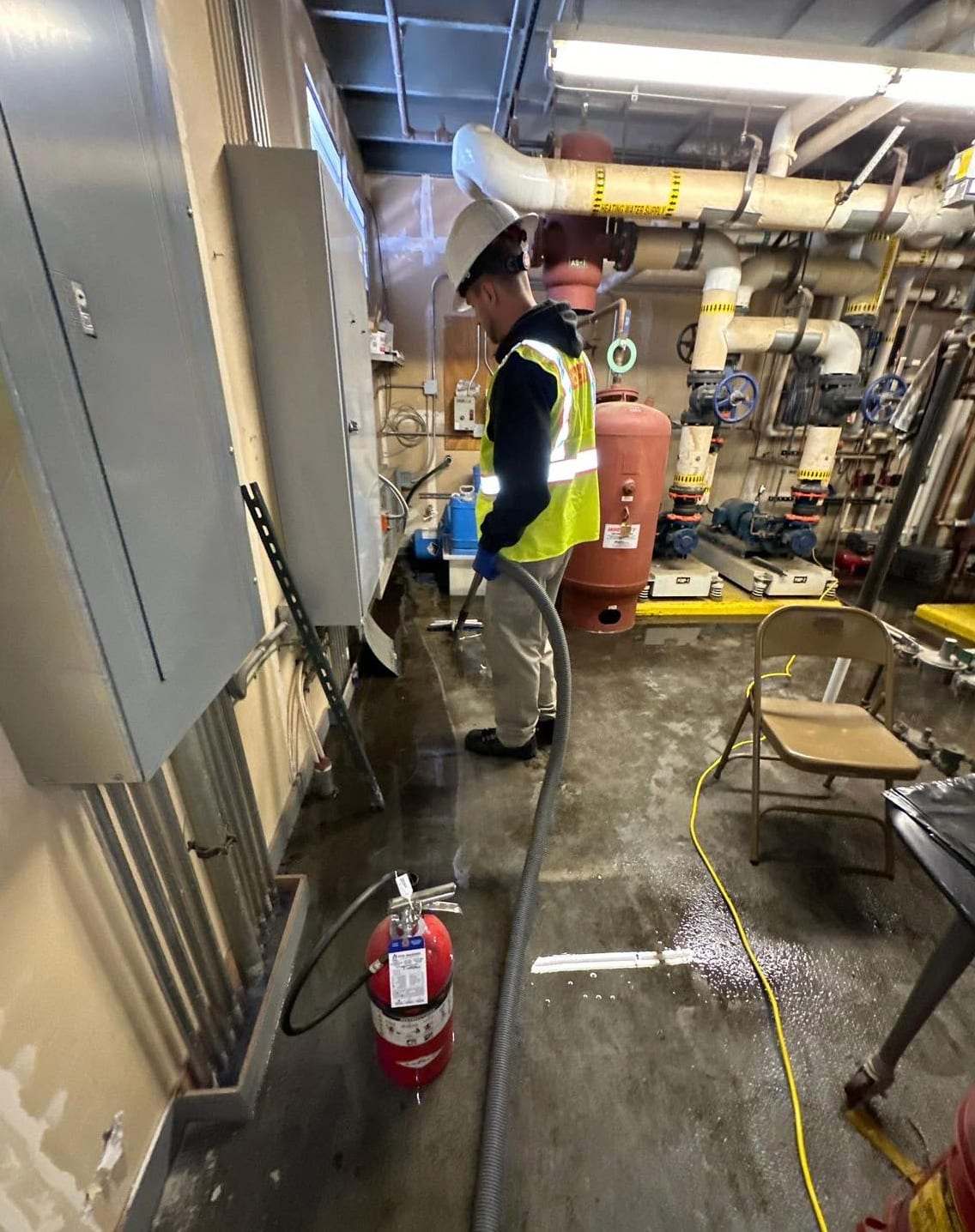
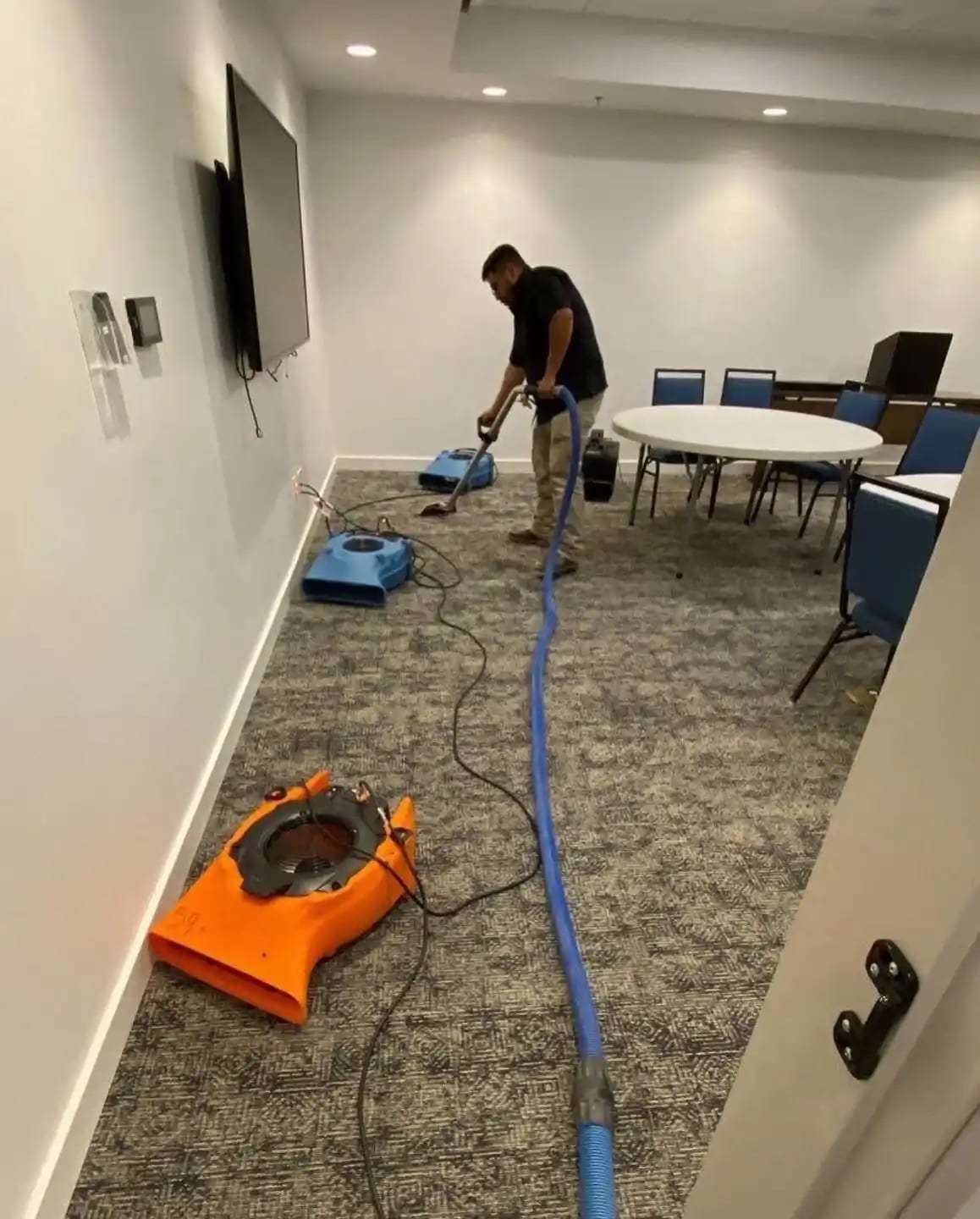
Every gallon of water left on the floor keeps soaking into carpet, pad, drywall, and framing. Extraction equipment, from submersible pumps for deep water to truck-mounted units and extraction wands for carpet, removes far more water in an hour than evaporation can in days.
Common equipment includes truck-mounted extraction units, air movers, dehumidifiers, and moisture meters; ask what will be used and who will run it. After extraction, drying equipment and daily readings bring the structure back to normal moisture levels.
A Wheat Ridge guide to standing water. Ask any company whether employees or subcontractors will run the equipment.
Wheat Ridge, a Jefferson County city just west of Denver, has many 1950s and 1960s ranch homes with basements or crawlspaces, along with newer infill. Clear Creek runs through the north side of the city, and summer thunderstorms can drop heavy rain quickly.
Basements and crawlspaces in older homes are the most common places standing water collects, whether from storms, failed water heaters, or plumbing leaks.
ZIP codes served: 80033 (Wheat Ridge).
Also nearby: 80212, 80214, 80002, 80215, 80211, 80204, 80226, 80004, 80003, 80202, 80221, 80030, 80219, 80232, 80203, 80205, 80218, 80223.
Basement after a storm
Heavy rain overwhelms a window well, and inches of water collect across a finished basement.
Crawlspace water
A supply line leak under a ranch home fills the crawlspace, soaking insulation and ductwork.
Water heater flood
A failed water heater sends water across a utility room and into the adjacent bedroom.
Removing water fast, then proving the structure is dry.
| Step | Stage | What happens |
|---|---|---|
| 1 | Assess | Check safety, find the source, and determine if the water is clean or contaminated. |
| 2 | Extract | Pump deep water and extract water from carpet and hard floors. |
| 3 | Remove | Take out saturated pad and other materials that won't dry properly. |
| 4 | Dry | Set air movers and dehumidifiers and record moisture readings daily. |
| 5 | Restore | Repair or replace damaged materials once dry. |
Extraction removes the water you can see. What happens next depends on what's under your feet.
Carpet and pad
Water spreads sideways through the pad far past the visible wet spot. Clean-water carpet can sometimes be saved; the pad usually can't.
Laminate
The fiberboard core swells and the edges peak. Once swollen it rarely flattens, so it's usually replaced.
Luxury vinyl plank
The planks survive, but water trapped underneath stays there. Some planks may need to be lifted to dry the subfloor.
Hardwood
Cups as it absorbs water. Dried slowly and evenly, it can often be refinished.
Tile on a slab
Holds up best, but grout lines and the slab underneath can stay damp; check the walls next to it.
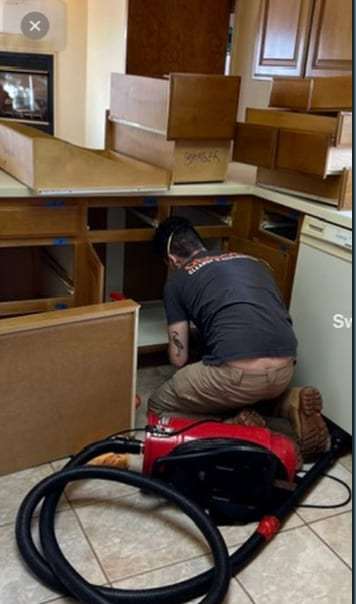
Water wicks up drywall from the floor, often a foot or more above the waterline. The baseboard hides exactly that zone. Removing baseboards, measuring the wall behind and drilling small weep holes if needed lets the wall dry in place instead of being cut out.
Guides and worked examples on flooring, basements and drying after standing water.
How fast should water be extracted?
As soon as possible. Materials keep absorbing water, and mold can start growing on damp materials within about 24 to 48 hours.
What's truck-mounted extraction?
It's a high-powered extraction system mounted in a service vehicle, with hoses run into the home. It removes water from carpet and floors faster than portable units.
Is water from a floor drain safe to clean up myself?
Water that came from a drain or sewer line should be treated as contaminated. Avoid contact and let professionals handle cleanup.
Can my basement carpet be saved?
Carpet pad is usually replaced. Carpet may be saved after clean-water events if extraction and drying start quickly.
Will insurance cover water extraction?
It depends on the cause and your policy. Sudden leaks are often covered; groundwater flooding and sewer backups may require separate coverage. The insurer decides.
Can crawlspaces be extracted and dried?
Yes, extraction and drying can include crawlspaces; mention it on the first call so the right equipment is brought.
Why remove the baseboards if the drywall looks fine?
Baseboards hide the bottom of the wall, where water wicks up first. Pulling them lets technicians measure the drywall behind, gives trapped water a way out, and often avoids cutting the wall at all. They can usually be reinstalled once everything is dry.
This form is not connected. This website is a draft preview: no business has been confirmed to receive requests, so the fields below are switched off and nothing can be sent. In an emergency, call 911.
Standing water in Wheat Ridge?
Stay out of water near outlets, stop the source if it's safe, photograph the damage, call your insurer, and choose an extraction company you have checked. Call 911 if there is electrical danger.